Noise-Induced Hearing Loss: Prevention Guide for Canadians
Noise-induced hearing loss is permanent but completely preventable. This guide covers how loud is too loud, which activities carry the highest risk, and what Canadians can do to protect their hearing.
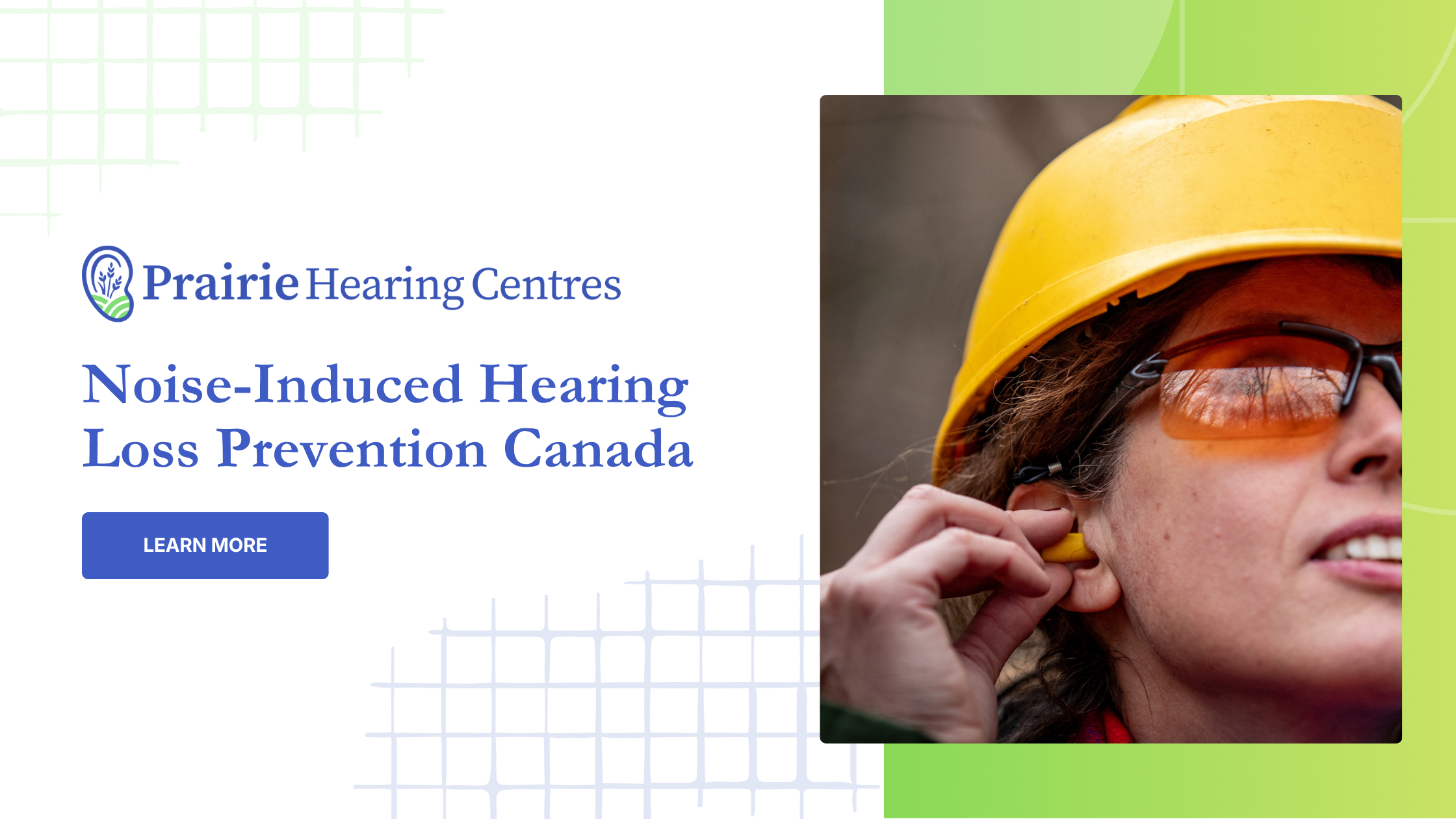
Here's something worth knowing: noise-induced hearing loss is the only type of hearing loss that is largely preventable, and yet it's one of the most common causes of permanent hearing damage in Canada.
Roughly 1.3 million Canadians have noise-related hearing loss. Construction workers, farmers, musicians, factory employees, hunters, and regular concert-goers all face elevated risk. And increasingly, so do younger Canadians who grew up listening to music through headphones at high volume.
Unlike age-related hearing loss, which comes with the territory of getting older, noise-induced hearing loss can be avoided. This guide explains how it happens, which activities carry the most risk, and how Canadians can protect their hearing at every stage of life.
How Noise Damages Hearing
Inside the inner ear (the cochlea), thousands of tiny sensory hair cells convert sound vibrations into electrical signals for the brain. These cells are extraordinarily sensitive and cannot regenerate. Once they are destroyed, the hearing loss they cause is permanent.
Loud noise damages hair cells in two ways:
Acute (Sudden) Damage
A single very loud sound, an explosion, a gunshot at close range, or an industrial blast, can destroy hair cells immediately. This is called acoustic trauma. The hearing loss can be instantaneous.
Cumulative (Gradual) Damage
Repeated exposure to moderately loud sound over time also destroys hair cells, but the damage accumulates slowly. You may not notice anything for years, and then discover during a hearing test that significant high-frequency loss has occurred.
The cochlea has a limited capacity to recover from temporary noise exposure (that muffled feeling after a concert, for example). But push past that threshold repeatedly and the damage becomes permanent.
How Loud Is Too Loud?
Sound is measured in decibels (dB). The relationship between decibels and damage isn't intuitive: every 3 dB increase doubles the sound energy, and every 10 dB increase represents a tenfold increase in intensity.
Here are common sound levels as a reference:
- Quiet library: 30 dB
- Normal conversation: 60 dB
- City traffic: 85 dB
- Lawnmower or leaf blower: 90 dB
- Chainsaw: 100 dB
- Concert or sporting event: 105 to 115 dB
- Ambulance siren (close): 120 dB
- Gunshot: 140 to 165 dB
The critical threshold is 85 dB. Health Canada considers 85 dB the upper limit for continuous occupational exposure over an 8-hour workday without hearing protection. Above this level, the safe exposure time drops rapidly:
- 88 dB: 4 hours
- 91 dB: 2 hours
- 94 dB: 1 hour
- 100 dB: 15 minutes
- 110 dB: less than 2 minutes
High-Risk Activities in Canada
Occupational Noise Exposure
The workplace is one of the primary sources of noise-induced hearing loss. Industries with elevated risk include:
- Construction and renovation trades
- Farming and agriculture (tractors, equipment)
- Manufacturing and industrial work
- Mining
- Transportation (trucks, heavy equipment)
- Military and law enforcement
In Manitoba, as across Canada, occupational safety legislation requires employers to implement hearing conservation programs when workers are regularly exposed to 85 dB or more. This includes noise monitoring, engineering controls, and provision of hearing protection devices.
If you work in a noisy environment, you are entitled to hearing protection through your employer. If it isn't being provided, that's a health and safety issue.
Recreational Noise
Many high-risk activities happen off the job.
Hunting and shooting sports. Firearms produce some of the highest peak sound levels of any activity. A single gunshot can cause permanent damage without protection. This is one of the leading causes of hearing loss among Canadian men over 60.
Snowmobiling and ATVs. Engine noise on snowmobiles can reach 95 to 105 dB. Manitoba's extensive snowmobile culture puts many residents at risk over long winter seasons.
Power tools and yard equipment. Lawnmowers, chainsaws, and leaf blowers all exceed 85 dB. An hour of lawn care without ear protection every weekend adds up.
Live music and concerts. A loud rock concert or festival can reach 110 to 120 dB. Even a single event at this volume can cause temporary threshold shift. Repeated exposure without protection causes lasting damage.
Headphone use. Health Canada recommends keeping personal listening devices below 60 percent of maximum volume. At maximum volume, many smartphones and earbuds can produce 100 to 110 dB. Over-ear headphones, used at moderate volume, are safer than in-ear earbuds at the same volume because they create more isolation from background noise (meaning you don't need to compete with the environment to hear).
Protecting Your Hearing: Your Options
Disposable Foam Earplugs
The most accessible and inexpensive option. When inserted correctly (the critical part), foam earplugs can reduce sound by 20 to 33 dB. They work well for most situations but require proper insertion technique to be effective, which many people don't do correctly.
Reusable Earplugs
Available in several styles, including corded pairs, musicians' plugs with flat attenuation filters, and flanged designs. More comfortable for extended wear than foam and useful for commuting, concerts, and light industrial work.
Custom-Molded Earplugs
Made by taking an impression of your specific ear canal, custom earplugs offer a precise fit that improves both comfort and protection. They don't need to be reinserted repeatedly, can be made in various attenuation levels, and are more hygienic for long-term use.
For musicians and performers, custom musician monitors provide attenuation that reduces overall volume while preserving the frequency balance of sound, so you can still hear clearly while being protected.
Prairie Hearing Centres offers custom hearing protection in Winnipeg, including custom earplugs, musician monitors, and swim molds, all made from ear canal impressions taken in-clinic.
Electronic Hearing Protection
Electronic earmuffs with built-in amplification allow users to hear normal conversation and environmental sounds while blocking out sudden loud sounds (like gunshots). These are popular among hunters and shooting sports participants and offer excellent situational awareness without sacrificing protection.
Warning Signs That Noise Has Already Caused Damage
Noise-induced hearing loss often doesn't announce itself dramatically. Signs that exposure may have already affected your hearing include:
- Temporary muffled hearing or ringing after noise exposure that takes hours or days to resolve fully
- Persistent tinnitus (ringing, buzzing, or hissing)
- Difficulty understanding speech in background noise
- Needing higher volumes on TV or phone calls
- Finding that people seem to mumble when they previously sounded clear
The temporary symptoms after exposure are a warning. Repeated warnings that are ignored become permanent damage.
Protecting Children's Hearing
Children's ears are equally vulnerable to noise damage. Age-appropriate hearing protection is available for children attending loud events (sporting events, concerts, air shows). Volume-limiting headphones for children are also worth considering for regular headphone use.
Talk to children early about hearing health. Habits formed in adolescence, especially around headphone volume, have a significant impact on hearing in adulthood.
If you have a history of noise exposure, whether occupational or recreational, a hearing assessment gives you a baseline to work from. Prairie Hearing Centres offers free, comprehensive hearing assessments in Winnipeg, with no referral required. If custom hearing protection is right for your lifestyle or profession, we can fit you with solutions built precisely for your ears.