How Modern Hearing Aids Work: A Plain-Language Guide
Modern hearing aids are far more advanced than most people realize. This plain-language guide explains how they work, what they can do, and what to expect from a fitting.
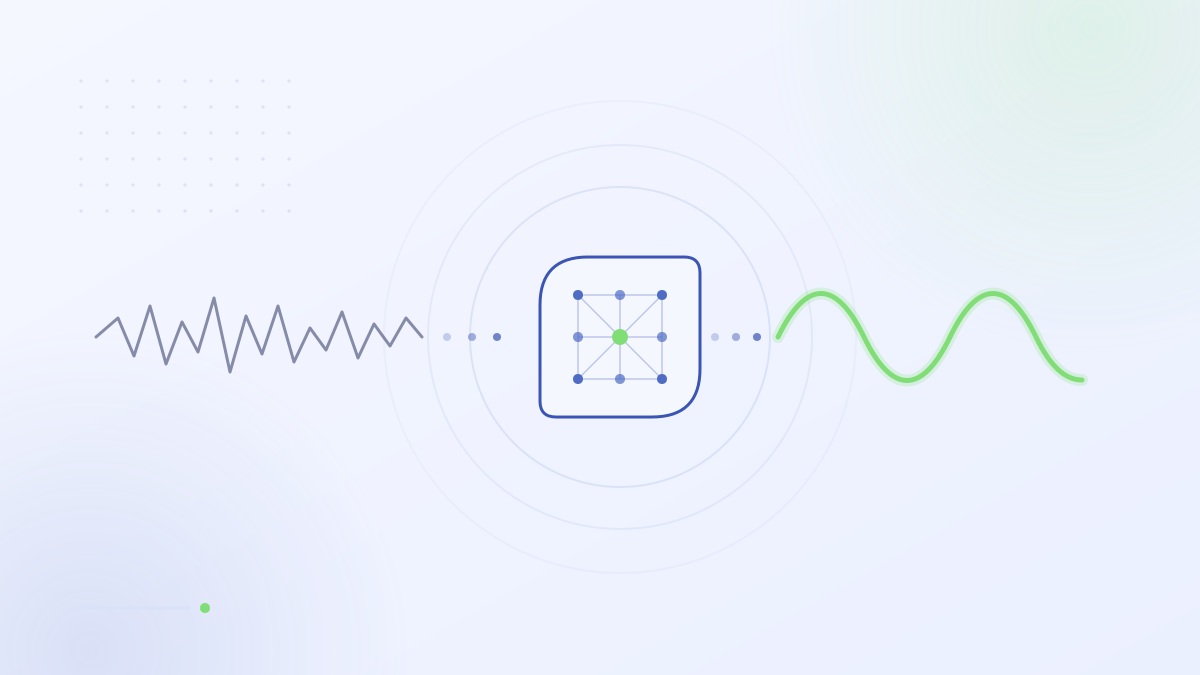
If your mental image of a hearing aid is a beige device that whistles and makes everything louder, it's worth an update.
Today's hearing aids are sophisticated medical devices. They're small enough to sit invisible inside the ear canal, stream audio directly from your smartphone, adapt in real time to different listening environments, and are powered by artificial intelligence that improves performance the longer you wear them.
Understanding how they work can make the idea of wearing one feel a lot less intimidating. Here's a plain-language breakdown.
The Basic Components
All hearing aids, regardless of style or price point, share the same core components.
Microphone
One or more microphones pick up sounds from the environment. Modern aids often have multiple directional microphones that can focus on sounds in front of you while reducing what's coming from the sides or behind.
Processor (Computer Chip)
This is the brain of the device. The chip analyzes the incoming sound, applies your personalized amplification prescription, and filters the signal to enhance speech while reducing background noise. The speed and sophistication of this chip varies significantly between technology levels.
Amplifier
The processed signal is amplified according to your hearing prescription. Crucially, modern aids don't amplify all sounds equally. They apply more gain at the frequencies where your hearing is weakest and less gain where your hearing is normal, based on your specific audiogram.
Receiver (Speaker)
The processed, amplified signal is delivered as sound into the ear canal through the receiver. In many styles, the receiver sits directly in the ear canal to reduce the distance sound has to travel.
Battery
Hearing aids run on either disposable zinc-air batteries (changed every few days to two weeks depending on battery size and usage) or rechargeable lithium-ion batteries that charge overnight, similar to a smartphone.
How a Hearing Aid Is Programmed
This is the part that separates a properly fitted hearing aid from an over-the-counter amplifier.
When you receive hearing aids from a hearing instrument specialist, they're programmed using software that loads your specific audiogram. This creates what's called an amplification prescription: a precise map of how much amplification to apply at each frequency to compensate for your specific pattern of hearing loss.
The programming is adjusted at your fitting appointment and refined over follow-up visits as your brain acclimates to the new sound quality. Getting hearing aids without professional fitting and follow-up is like getting a prescription filled at random rather than based on your eye exam.
At Prairie Hearing Centres in Winnipeg, hearing aid fittings include real-ear measurement, a verification process that confirms the hearing aid is actually delivering the intended amplification while in your ear, not just in the testing booth.
How Digital Processing Handles Noise
One of the biggest concerns people have about hearing aids is background noise. "Will it just make everything louder, including noise?"
Modern digital hearing aids are designed specifically to address this. Here's how:
Directional Microphone Systems
The hearing aid monitors whether sound is coming from in front of you (likely speech you're trying to hear) or from behind or the sides (likely background noise). It automatically prioritizes the signal from ahead and reduces noise from other directions.
Noise Reduction Algorithms
The processor can identify characteristics of background noise (steady-state sounds like air conditioning, crowd noise, wind) and apply digital filters to reduce them while preserving speech signals.
Speech Enhancement
Newer hearing aids use machine learning to recognize patterns of human speech and actively boost those patterns even in complex acoustic environments.
No hearing aid eliminates background noise entirely. But good technology makes a meaningful difference, and it continues to improve.
Connectivity: What "Bluetooth Hearing Aids" Actually Do
Most modern hearing aids include Bluetooth connectivity, which allows them to communicate wirelessly with other devices.
Direct Streaming
Calls from your smartphone come directly into both hearing aids, without having to hold the phone up to your ear. The same applies to audio from tablets, laptops, and smart TVs. This is particularly useful for people who struggle with phone calls.
App Control
Hearing aid manufacturer apps (available for both iPhone and Android) let you adjust volume, switch between listening programs, and change settings directly from your phone without touching the aids.
TV Streamers
Accessories are available that stream audio from your television directly to your hearing aids, allowing you to hear the show at your preferred volume while others in the room use the standard TV volume.
Rechargeable Cases
Bluetooth hearing aids often come with charging cases similar to wireless earbuds. Place the aids in the case overnight and they're fully charged in the morning, no battery swapping required.
Common Hearing Aid Styles
Hearing aids come in several styles, and the right choice depends on your degree of hearing loss, lifestyle, and personal preference.
Receiver-in-Canal (RIC/RITE)
The most popular style today. A small device sits behind the ear and connects via a thin wire to a receiver that sits inside the ear canal. Very discreet, comfortable, and suitable for mild to severe hearing loss. Usually the first recommendation for new wearers.
Behind-the-Ear (BTE)
The processor sits behind the ear and connects to the ear canal via tubing. A slightly larger device, often used for more severe hearing loss or for individuals who prefer easier handling.
In-the-Ear (ITE)
A custom-molded device that fills the outer ear. No wire or behind-the-ear component. Good for mild to moderate hearing loss.
In-the-Canal (ITC) and Completely-in-Canal (CIC)
Smaller custom devices that sit partly or entirely in the ear canal. Very discreet. Limited to mild to moderately severe hearing loss due to size constraints on components.
Invisible-in-Canal (IIC)
The most discreet option: sits deep in the ear canal and is invisible when worn. Not appropriate for all types of hearing loss or ear canal shapes.
What to Expect From a Hearing Aid Fitting
Getting hearing aids is a process, not a single appointment.
Day of Fitting
Your hearing specialist loads your audiogram into the programming software, fits the devices to your ears, and uses verification measures to confirm the aids are performing correctly. You'll try them on, hear the difference immediately, and go through initial adjustments.
Adjustment Period
Your brain needs time to relearn sounds it hasn't heard clearly in years. Most people find the first few weeks slightly overwhelming, voices sound different, there's awareness of sounds you'd stopped noticing. This is normal and resolves as your auditory system adjusts. Most specialists recommend wearing the aids as much as possible during this period.
Follow-Up Appointments
You'll have scheduled follow-ups, typically at a few weeks and again at a few months, to fine-tune the programming based on your real-world experience. Good hearing care is ongoing, not a one-time event.
A hearing aid fitting at Prairie Hearing Centres in Winnipeg starts with a comprehensive assessment to understand your specific hearing profile. From there, Kyle McCombs, BC-HIS, will match you with technology suited to your hearing loss, lifestyle, and budget. Picking the right clinic matters as much as picking the right device — see our guide on how to choose a hearing clinic in Winnipeg.