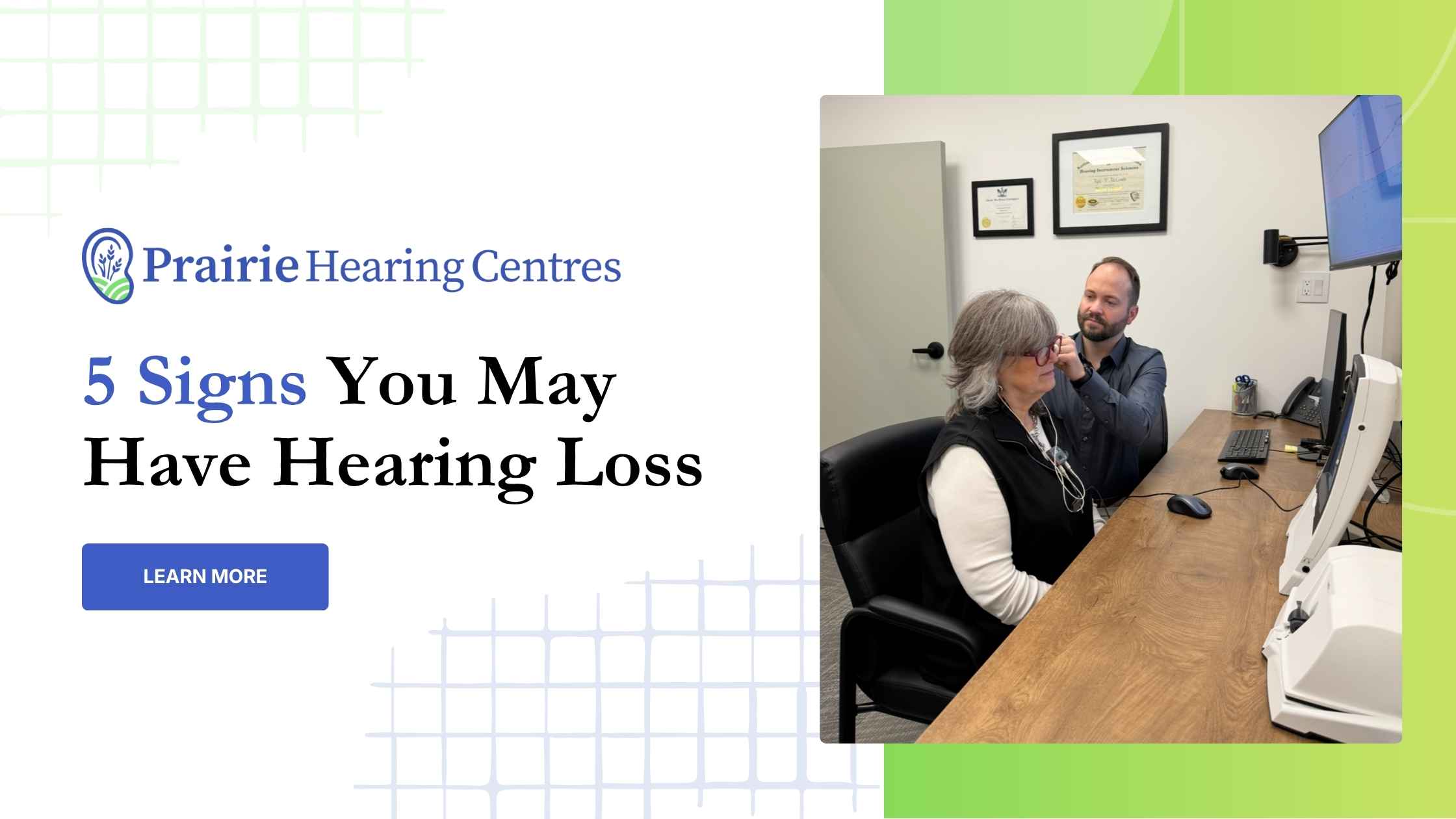
Hearing loss rarely announces itself all at once. For most people, it develops gradually over months or years, so slowly that friends and family often notice long before the person affected does. That delay matters, because untreated hearing loss is linked to social withdrawal, cognitive decline, and reduced quality of life. Knowing the early signs can make all the difference.
1. You're Turning the Volume Up
If the television volume that once suited the whole room now seems low only to you, or if others regularly ask you to turn it down, that's one of the clearest early indicators of hearing difficulty. The same applies to the volume on your phone or radio.
2. Following Conversations in Noise Has Become Exhausting
Struggling to hear in background noise is typically one of the first functional changes people notice. A restaurant, a family gathering, a hockey arena, situations where there's competing sound suddenly require real effort. You find yourself watching lips, asking people to repeat themselves, or nodding along without fully catching what was said.
3. You Mishear Words, Especially on the Phone
Phone conversations remove the visual cues we unconsciously rely on: lip movement, facial expression, gesture. When those cues disappear, mild hearing loss that goes unnoticed in person can become obvious. If phone calls feel like guesswork, or if you frequently mishear words even in quiet, it's worth having your hearing checked.
4. Others Comment on Your Hearing
This one can sting a little, but when the people around you start mentioning that you don't seem to hear well, or that conversations feel one-sided, it's worth taking seriously. Those closest to us often notice the pattern before we're ready to acknowledge it ourselves.
5. You Hear a Ringing, Buzzing, or Hissing in Your Ears
Tinnitus, the perception of sound when no external source is present, affects the majority of people with hearing loss. While tinnitus has many causes, its presence alongside any of the other signs above is a strong reason to book a hearing assessment.
A comprehensive hearing assessment at Prairie Hearing Centre takes about an hour, requires no referral, and gives you a complete picture of your hearing health, whether or not hearing loss is present.
If you recognised yourself in two or more of these signs, the most important next step is a professional hearing evaluation. Hearing loss is not a normal part of aging that you simply have to accept. It's a treatable condition, and the earlier it's addressed, the more options are available to you.